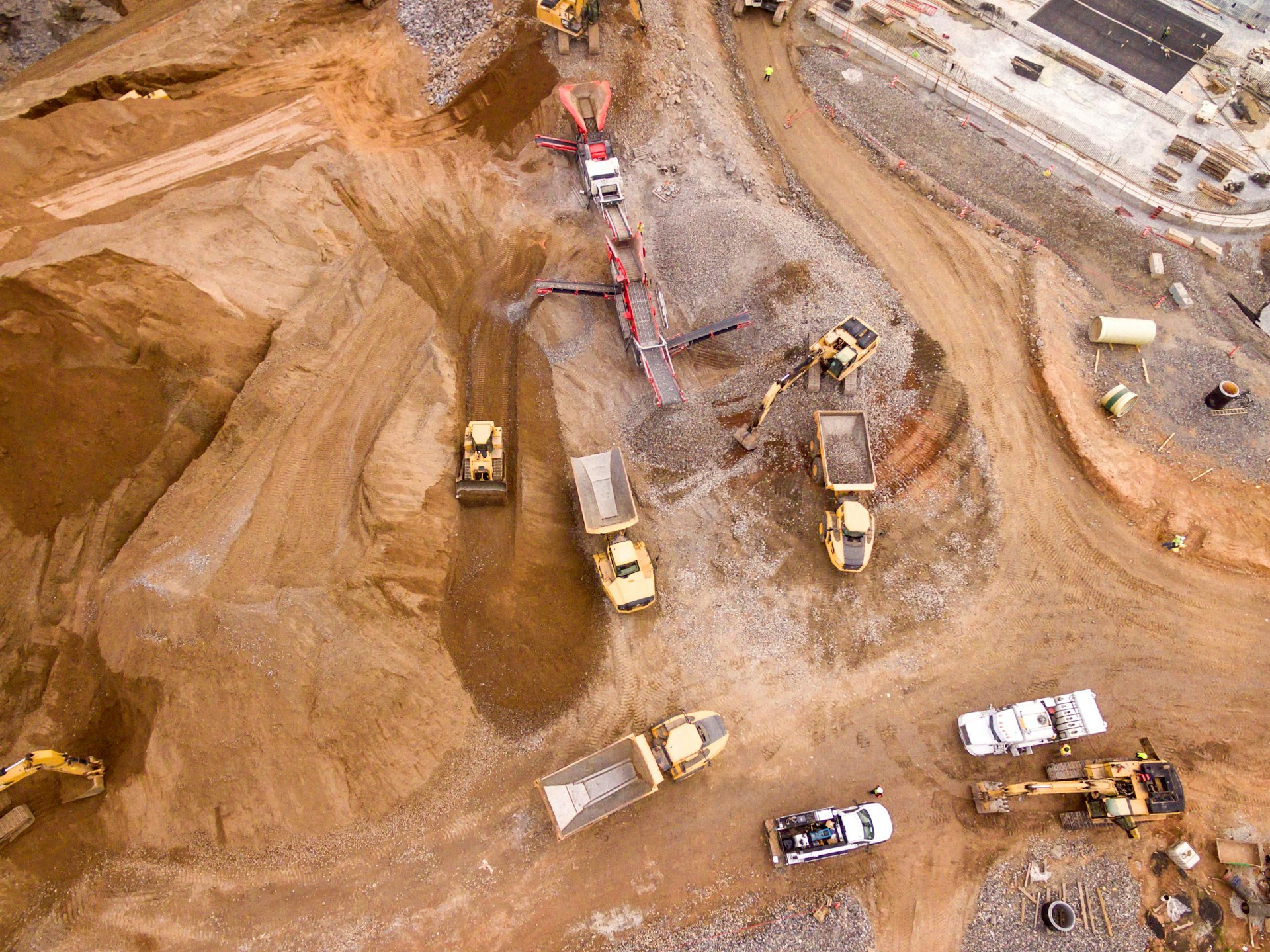

You probably already know how much money you need to start a construction business or keep one running. Construction projects often need money before they can start making money. This is because they need heavy equipment, raw materials, labor, permits, and other things that come up. It’s essential to get the right loan for construction projects. In this article, we’ll explain what construction business financing really means, the benefits, seven smart ways to get money, what you need to do to qualify, the trends in the industry in 2025, how to choose the best path for your business, and answer the most common questions you have. You’ll be better able to make smart funding choices and see why working with a specialist like ICG Funding can give you an edge by the end.
What Is a Loan for Construction Project Financing
In simple terms, “construction business financing” means borrowing or getting money specifically to pay for the costs of a construction company, like building things, buying tools, paying workers during a project, or filling in payment gaps. Because construction projects can take a long time, clients can be late with payments, and costs can be high up front with uncertain outcomes, you need to choose financing that is just as complicated.
For instance, instead of getting a lump sum at the start, you could draw a loan in stages as your project moves forward. You could also get equipment financing, where the machinery itself serves as collateral. It’s important to know how financing works and what it looks like, because the wrong mismatch can hurt your cash flow, raise your cost of capital, or even stop your project.
What are the benefits of this kind of loan?
When you use the right kind of financing for construction, you get many benefits, such as:
Better cash flow management: You don’t have to wait for clients to pay or juggle your own money; you can get money ahead of time or turn receivables into cash.
Growth enabled: You can bid on bigger contracts, buy more equipment, or hire more people without worrying about running out of money.
Risk reduction: Financing helps cover cost overruns, payment delays, and time-to-completion risks that are common in construction.
Competitive advantage: Contractors with good financing options can move quickly, hire subcontractors, and get materials early (sometimes at lower prices), which helps them win more tenders.
Asset acquisition: Equipment financing or leasing lets you use capital without tying up a lot of money, and it often comes with tax or depreciation benefits.
Best Ways to Get a Loan for a Construction project
Here are seven important ways to get money that are especially useful for construction companies in 2025. Each one comes with a brief description of who it serves, its pros and cons, and its usual terms.
1. Loans backed by the SBA
Goal: To buy equipment, pay for general working capital, and do small expansion projects.
Who qualifies: Small construction companies in the U.S. with good credit, a long history of making money, and owners who are willing to give a personal guarantee.
Pros: Interest rates are relatively low, the government guarantees the loan, which lowers the risk for the lender, and the terms can be long.
Cons: Lots of paperwork, slower underwriting, and often needs collateral and a personal guarantee.
Normal terms: For well-qualified borrowers, interest rates are in the mid-single digits, and loan amounts can be very different.
2. Leasing or financing equipment
Goal: To buy heavy machinery, trucks, cranes, and tools needed for work on a site.
Who qualifies: Contractors who have real equipment needs and can show that their cash flow or balance sheet is strong.
Pros: The equipment itself often serves as collateral, the approval process is faster, and you don’t have to put down as much money at first.
Cons: Depreciation, maintenance costs, and sometimes shorter terms that can make the monthly cost higher.
Common terms: Terms could be anywhere from 3 to 7 years, depending on how long the equipment lasts and the interest rate based on the borrower’s credit history.
3. Working Capital Loans and Lines of Credit
Purpose: To pay for everyday costs like payroll, buying materials, and moving costs between projects.
Who is eligible: Companies that have been in business for a while, have a good credit score, and make money.
Pros: You can draw money when you need it and pay it back when you can. It also works with the cash flow that is common in construction.
Disadvantages: Usually have higher interest rates than term loans and may need a borrowing base or collateral.
Common terms: revolving line, payments that only cover interest during the draw phase, and rates that change.
4. Invoice factoring or financing receivables
Goal: Turn unpaid client invoices into cash right away so you don’t have to wait 30 to 90 days to get paid.
Who qualifies: Contractors who bill businesses (B2B) and have unpaid bills from good customers.
Pros: It makes it easier to get cash and lets you take on new jobs while you wait for old ones to finish.
Cons: You may lose control over collections, depending on your customers’ credit, and factoring fees can be high.
Common terms: A factor fee of 1% to 5% plus interest; an advance rate of 70% to 90% of the invoice value.
5. Financing Based on Revenue or Other Sources
Goal: To get money based on your past and future income instead of traditional collateral. Good for small contractors or services that are only available in certain areas.
Who qualifies: Companies that make money consistently but may have bad credit or not enough collateral.
Pros: It works faster, has fewer traditional requirements, and can be flexible.
Cons: Higher cost of capital, shorter pay-down periods, and more aggressive underwriting are common.
Common terms: Pay back a set percentage of monthly income until a certain amount is paid back.
6. Loans for building or projects
Purpose: To get money for big building projects (homes, businesses, etc.) in stages (“draws”) as the work goes on.
Who is eligible: Developers or contractors who have detailed plans, budgets, sites, and permits for the project.
Pros: It fits the construction schedule, links draws to milestones, and can move the risk of going over budget.
Disadvantages: Only approved after a lot of review, strict rules, and a lot of money if there are delays.
Typical terms: For risky projects in 2025, interest rates will be between 7% and 9% or higher.
7. Merchant Cash Advances (MCAs) and Short-Term Bridge Loans
Goal: To get quick, short-term money to fill a gap (for example, for mobilization, an unexpected delay, or an urgent material purchase).
Who is eligible: Contractors who need quick access may not be able to get a regular loan.
Pros: Quick, little paperwork in many cases, and flexible use.
Cons: Very high cost, short repayment periods, and can hurt cash flow.
Common terms: Payback through daily or weekly deductions from revenue; the effective interest rates can be very high.
Trends in the Industry for 2025
If you know more about the 2025 landscape, you can choose and negotiate financing more easily.
Demand for construction loans is going up again. In the U.S., the amount of outstanding 1–4 family construction and land-development loans reached about $90 billion in the first quarter of 2025, which is a small increase from the previous quarter.
Interest rates are still high: the interest rate on many construction loans is between 7% and 9%, or even higher if the loan is risky.
The cost of materials is still going up: input prices went up by about 6% a year until early 2025.
Alternative and private credit is filling the gaps left by traditional banks that are cutting back on lending for risky construction projects.
Fintech and digital underwriting are becoming more popular: faster approvals, decisions based on more data, and structures that are made just for contractors.
How to Pick the Best Way to Pay for Something
It’s not just about the lowest rate when you choose the right financing. Here’s how to pick:
1. Match your need: Are you getting just one excavator? Or paying for a whole multi-million-dollar building? The option is based on the scope.
2. Look at the total cost, not just the rate: For example, MCAs may look easy, but the effective rate could be over 20%. A longer-term SBA loan might cost more up front but less over the life of the loan.
3. Cash-flow fit: If you have bills that are due but haven’t been paid yet, invoice factoring might help. A term or project loan might be better if you have a steady backlog and want to grow.
4. Underwriting timeline: Some options, like MCAs or alternative lenders, are quick, while others, like traditional term loans, take longer. If you’re bidding on a job right now, speed may be important.
5. Collateral and risk tolerance: If you’re okay with putting up equipment or real estate as collateral, you might be able to get better terms. If not, you might have to pay more.
6. Exit strategy: Know how you’ll pay back the loan, especially if it’s for a project. Will the project’s cash flow be enough to pay back the loan? Will you refinance into a permanent building?
7. Choosing a partner: Working with a financing expert who knows about construction, like ICG Funding, can make a big difference in how the deal is set up, how quickly it gets approved, and what the terms are.
Last Tips
If you think rates and terms will go up, lock them in early.
Make sure your finances are clean and up-to-date; lenders will look at them closely.
Keep a healthy backlog of contracts with realistic margin expectations.
Monitor the project’s cost controls and schedule milestones. Delays raise the risk and cost of financing.
Borrow wisely; too much debt and insufficient cash flow is a bad sign.
Don’t rely on just one type of financing, like invoice factoring, unless it fits with everything else you do.
Be ready for things that could go wrong, like price spikes for materials, not enough workers, or delays in getting permits. The financing structure should be flexible.
Frequently Asked Questions
Can I use the same money to buy equipment and get a project started?
Yes, but you should make sure that the terms are the same for both uses. The gear is used as collateral for equipment financing. Mobilization financing might be more like a working-capital line or MCA. Using different types of businesses in the same building can make underwriting harder.
What credit score do I need to get a project loan?
There isn’t a set cut-off, but most lenders want personal credit scores of 740 or higher for the best terms. Some other lenders might accept 620 or higher, but it will cost a lot more.
Will interest rates for construction loans probably go down in 2025?
Maybe, but it’s not certain. Inflation has gone down a little, but the costs of building materials are still high (about 6% per year in early 2025), and lenders are still being careful.
How does invoice factoring change the way I deal with customers?
You should pick a partner whose method keeps clients happy, since the factoring company might take over collections. If you don’t, you could hurt long-term relationships.
Why should I think about getting a loan from ICG Funding?
Because they focus on the specific financing needs of construction companies, like equipment, mobilization, working capital, and draw-type loans. Because they know a lot about the industry, they can underwrite faster, structure deals better, and make terms that work for contractors.
Conclusion
For construction business owners, getting the right loan is essential. It’s not enough to get any loan; it needs to fit with the size of your project, your cash flow, your risk tolerance, and your growth goals. You know about the different types of loans available, such as SBA loans, equipment financing, invoice factoring, and MCAs. You also know how trends in 2025, such as higher rates, rising material costs, and more alternative lending, are affecting decisions. You can confidently fund your next project if you look at the qualification criteria, compare the total cost and benefit, and work with a partner who knows a lot about construction financing, like ICG Funding. Keep in mind that it’s not just about getting money; it’s about getting the right money.